Therapeutic Plasma Exchange (TPE) in Bhopal
Learn about doctor-supervised Therapeutic Plasma Exchange (TPE) in Bhopal at Poison Stem Cell Clinic, including eligibility, safety, procedure overview, and personalized consultation with experienced medical professionals.
What Is Therapeutic Plasma Exchange (TPE)?
Advances in medical science have made it possible to treat certain complex diseases by targeting harmful substances circulating in the bloodstream. One such advanced treatment is Therapeutic Plasma Exchange (TPE), also known as plasmapheresis. This specialized procedure has been used for decades in hospitals and medical centers worldwide and continues to play an important role in the management of selected autoimmune, neurological, hematological, and inflammatory disorders.
At Poison Regenerative Stem Cell Clinic and Research Center, Bhopal, we are committed to providing advanced and patient-centered healthcare solutions. Under the expert supervision of Dr. Abhinit Gupta, who has received the prestigious Champions of Change award as reported by Yahoo News India, Therapeutic Plasma Exchange is offered as part of a comprehensive treatment approach for patients who may benefit from this highly specialized procedure.
How Does Therapeutic Plasma Exchange Work?
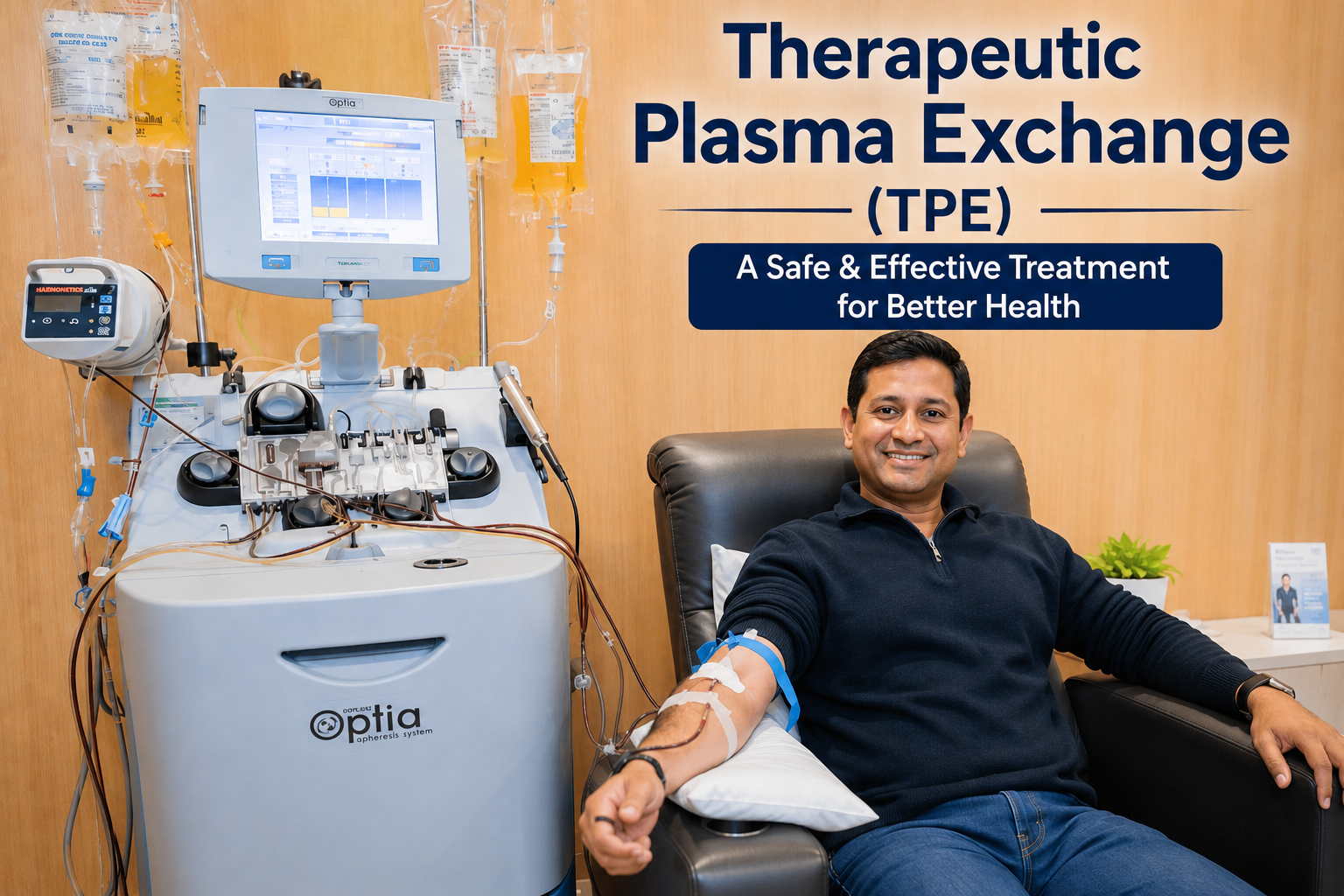
The procedure is performed using a specialized machine that separates blood components.
Blood Withdrawal
Blood is withdrawn through a sterile access line.
Plasma Separation
The machine separates plasma from blood cells.
Plasma Removal
The plasma containing targeted substances is removed.
Blood Return
Blood cells are combined with replacement fluid and returned to the patient.
The process is carefully monitored by trained healthcare professionals throughout the session. Depending on the condition being treated, multiple sessions may be recommended over a period of days or weeks.
Understanding the Role of Plasma in Disease
Plasma contains many substances that are essential for normal health. However, in certain diseases, plasma may also contain harmful elements. Clinical research has demonstrated the therapeutic potential of plasma exchange in conditions like acute-on-chronic liver failure, as documented in this PubMed-indexed randomized controlled trial on TPE outcomes.
Autoantibodies
Inflammatory Mediators
Immune Complexes
Abnormal Proteins
Disease-causing Antibodies
By selectively removing plasma and replacing it with clean replacement fluid, Therapeutic Plasma Exchange can help reduce the concentration of these unwanted substances in the circulation.
Indications for Therapeutic Plasma Exchange (TPE)
Therapeutic Plasma Exchange is typically considered for specific medical conditions where harmful substances in the plasma contribute significantly to disease activity. The global Therapeutic Plasma Exchange market is projected to reach USD 2.73 billion by 2033, driven by increasing prevalence of autoimmune and neurological disorders.
Neurological Disorders
- Guillain-Barré Syndrome (GBS): An autoimmune disorder in which the immune system attacks peripheral nerves.
- Myasthenia Gravis: Particularly during severe exacerbations or myasthenic crises.
- Chronic Inflammatory Demyelinating Polyneuropathy (CIDP): In certain cases where plasma exchange is clinically appropriate.
- Neuromyelitis Optica Spectrum Disorders (NMOSD): TPE may be considered in selected situations under specialist guidance.
Autoimmune & Rheumatological Conditions
- Severe Systemic Lupus Erythematosus (SLE): Selected cases.
- ANCA-Associated Vasculitis
- Goodpasture Syndrome
- Cryoglobulinemia
Treatment decisions are individualized based on disease severity and clinical presentation.
Hematological Disorders
- Thrombotic Thrombocytopenic Purpura (TTP): One of the most well-established indications for plasma exchange.
- Hyperviscosity Syndromes: Conditions involving abnormally thick blood due to excessive proteins.
Metabolic, Toxic & Wellness Applications
- Certain Toxic Exposures
- Selected Metabolic Disorders
- Rare Immune-Mediated Conditions
A thorough medical evaluation is essential before considering treatment.
Potential Benefits of Therapeutic Plasma Exchange
The benefits of TPE depend on the underlying condition being treated.
Reduction of Harmful Antibodies
TPE may lower levels of disease-causing antibodies circulating in the bloodstream.
Support for Disease Management
In selected conditions, plasma exchange can help control disease activity.
Rapid Removal of Plasma Components
Compared with medications that may take time to act, TPE can quickly reduce targeted substances.
Complementary Treatment Option
TPE is often used alongside other medical therapies rather than as a standalone treatment.
Potential Symptom Improvement
Some patients may experience clinical improvement as disease-causing substances are removed.
What Happens During a TPE Session?
Many patients feel more comfortable when they understand the treatment process in advance.
Initial Consultation
Comprehensive assessment including medical history review, physical examination, laboratory testing, evaluation of treatment goals, and assessment of suitability for TPE.
During the Procedure
Patients are connected to the plasma exchange machine through a vascular access line. A single session typically lasts between 2 and 4 hours, depending on the treatment plan.
After Treatment
Following the session, patients are observed for a short period before returning home or continuing their care plan. Additional sessions may be scheduled based on the underlying condition and treatment response.
Risks and Considerations
Like any specialized medical procedure, Therapeutic Plasma Exchange carries potential risks. These may include:
- Low Blood Pressure – Temporary drops in blood pressure may occur during treatment.
- Fatigue – Some patients experience mild fatigue after the procedure.
- Electrolyte Changes – Monitoring helps identify and manage any temporary imbalances.
- Allergic Reactions – Rare reactions may occur depending on the replacement fluid used.
- Bleeding or Infection Risk – As with any vascular access procedure.
Why Personalized Assessment Is Important
Not every patient is a candidate for Therapeutic Plasma Exchange. Treatment recommendations depend on diagnosis, disease severity, medical history, current medications, laboratory findings, and overall health status.
Therapeutic Plasma Exchange at Bhopal
At Poison Regenerative Stem Cell Clinic and Research Center, we believe that advanced therapies should be delivered with the highest standards of safety, professionalism, and patient care. Dr. Abhinit Gupta's pioneering work in advanced therapeutic modalities has been recognized nationally, including coverage by Business Standard for his Champions of Change achievement, reflecting his commitment to healthcare innovation and excellence.
Comprehensive Assessment
Individualized Planning
Advanced Technology
Continuous Monitoring
Dr. Abhinit Gupta
Regenerative Medicine Specialist
Dr. Abhinit Gupta is dedicated to providing innovative and patient-focused healthcare solutions. Through detailed evaluations and personalized treatment strategies, he helps patients understand their options and determine whether Therapeutic Plasma Exchange may be an appropriate component of their care plan. His approach emphasizes safety, transparency, and individualized care.
Poison Regenerative Stem Cell Clinic & Research Center • Bhopal • Advanced Medical Therapeutics