Transcranial Magnetic Stimulation (TMS)
Advanced Non-Invasive Brain Stimulation Therapy for Mental and Neurological Well-Being
Brain Health Innovation
What Is Transcranial Magnetic Stimulation (TMS)?
The human brain is one of the most complex and remarkable organs in the body. It controls our thoughts, emotions, memory, movement, behavior, and overall quality of life. As medical science continues to advance, innovative technologies are opening new possibilities for supporting brain health, neurological recovery, and mental wellness.
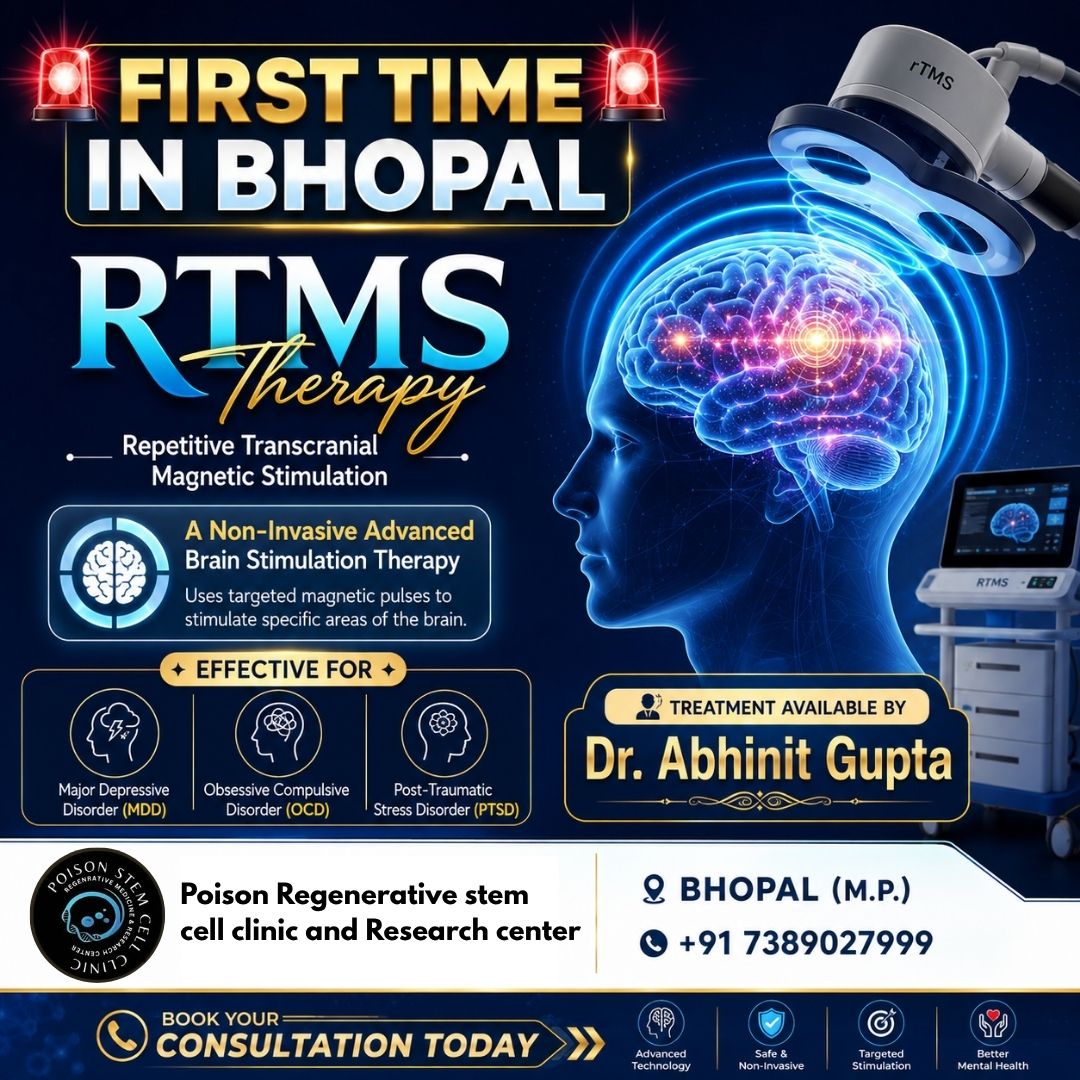
One such breakthrough technology is Transcranial Magnetic Stimulation (TMS), a non-invasive treatment that uses magnetic pulses to stimulate specific areas of the brain. Over the past decade, TMS has gained global recognition as an advanced neuromodulation therapy that may support patients dealing with certain neurological and mental health conditions.
At Poison Regenerative Stem Cell Clinic and Research Center, Bhopal, we offer advanced Transcranial Magnetic Stimulation (TMS) therapy under the expert supervision of Dr. Abhinit Gupta. Our goal is to provide personalized, evidence-informed care that supports brain function, neurological wellness, and overall quality of life.
How Does TMS Work?
The brain functions through complex electrical and chemical signaling networks. Certain neurological and mental health conditions may be associated with changes in the activity of specific brain regions. TMS is designed to deliver targeted magnetic stimulation to these areas.
The magnetic pulses generated by the TMS device can influence neuronal activity and help modulate communication pathways within the brain.
This process is known as neuromodulation, which refers to the adjustment of neural activity through targeted stimulation.
The treatment is carefully planned and customized according to each patient's clinical needs and treatment goals.
Benefits of Transcranial Magnetic Stimulation
TMS has attracted significant attention because it offers a non-invasive approach to supporting brain health and neurological function.
Indications for Transcranial Magnetic Stimulation
TMS has been studied and utilized in various neurological and mental health settings.
Depression Support
Widely recognized for supporting patients with depressive symptoms
Anxiety-Related Conditions
May be evaluated as part of comprehensive mental wellness programs
Neurological Rehabilitation
Incorporated into rehabilitation strategies for neurological recovery
Cognitive Wellness
Brain health and cognitive optimization plans
Post-Stroke Rehabilitation
Increasingly investigated within rehabilitation-focused programs
Chronic Pain Management
Selected patients may undergo evaluation within multidisciplinary approaches
Neurodevelopmental Disorders
Individualized treatment planning under specialist supervision
Suitability depends on a detailed medical assessment and should always be determined by a qualified healthcare professional.
What Happens During A TMS Session?
Many patients feel more comfortable when they understand the treatment process beforehand.
Initial Consultation
Comprehensive evaluation including medical history review, neurological assessment, symptom evaluation, treatment goal discussion, and suitability determination.
Brain Mapping & Treatment Planning
The treatment area is identified based on the patient's condition and therapeutic objectives. A personalized protocol is then developed.
Treatment Session
The patient remains awake and seated comfortably. A magnetic coil is positioned near the scalp. Controlled magnetic pulses are delivered to specific brain regions.
Treatment sessions typically last between 20 and 40 minutes, depending on the protocol being used. The number of sessions varies according to the individual's condition and treatment plan.
What Does TMS Feel Like?
Patients often describe the sensation as a gentle tapping or clicking feeling on the scalp. Most individuals tolerate treatment well.
Because no anesthesia is required, patients remain alert and can communicate with healthcare providers throughout the procedure.
Safety and Considerations
TMS is generally considered safe when performed under proper medical supervision and established clinical protocols.
Some individuals may experience temporary effects such as:
A thorough evaluation is essential before beginning treatment to ensure suitability and safety.
Why Personalized TMS Treatment Matters
Every brain is unique. Effective TMS therapy requires individualized assessment and treatment planning based on:
Medical history
Neurological status
Treatment goals
Current symptoms
Overall health profile
A personalized approach helps maximize patient comfort and therapeutic effectiveness.
TMS Therapy at Poison Regenerative Stem Cell Clinic
At Poison Regenerative Stem Cell Clinic and Research Center, we are committed to integrating innovative healthcare technologies into patient-centered treatment programs.
We believe that advanced technology combined with compassionate care can help support better health outcomes and improved quality of life.
Dr. Abhinit Gupta
Neuromodulation & Regenerative Specialist
Dr. Abhinit Gupta is dedicated to helping patients explore advanced therapeutic options that support neurological wellness and overall well-being.
His approach emphasizes:
Before recommending TMS, he conducts a detailed consultation to evaluate each patient's unique needs and treatment objectives.
Frequently Asked Questions
What is Transcranial Magnetic Stimulation (TMS)?
TMS is a non-invasive therapy that uses magnetic pulses to stimulate specific regions of the brain.
Is TMS painful?
Most patients experience only mild tapping sensations on the scalp and generally tolerate treatment well.
Does TMS require surgery?
No. TMS is completely non-invasive and does not involve surgery or implanted devices.
How long does a TMS session take?
Most sessions last approximately 20-40 minutes.
Is there any downtime after treatment?
No. Patients can usually resume normal activities immediately after the session.
Who may benefit from TMS therapy?
Individuals being evaluated for neurological, cognitive, rehabilitation, or mental wellness support programs may be considered based on clinical assessment.
Is TMS safe?
When performed by trained professionals under proper protocols, TMS is generally considered safe for appropriate candidates.
Where can I receive TMS Therapy in Bhopal?
TMS Therapy is available at Poison Regenerative Stem Cell Clinic and Research Center, Bhopal, under the guidance of Dr. Abhinit Gupta.
The Future of Brain Health
Transcranial Magnetic Stimulation (TMS) represents an exciting advancement in modern neurological and mental wellness care. Through non-invasive magnetic stimulation, TMS offers a sophisticated approach to supporting brain function, neurological rehabilitation, and overall cognitive health.
At Poison Regenerative Stem Cell Clinic and Research Center, Bhopal, patients receive personalized TMS treatment plans under the expert supervision of Dr. Abhinit Gupta, ensuring professional guidance, advanced technology, and individualized care throughout their treatment journey.

Ready to Improve Your Brain Health?
If you are interested in learning more about Transcranial Magnetic Stimulation and whether it may be appropriate for your needs, schedule a consultation today and explore the possibilities of advanced brain stimulation therapy.